
This article originally appeared at Small Town Summits Articles. I have the privilege of being the Content Manager for STS Articles.
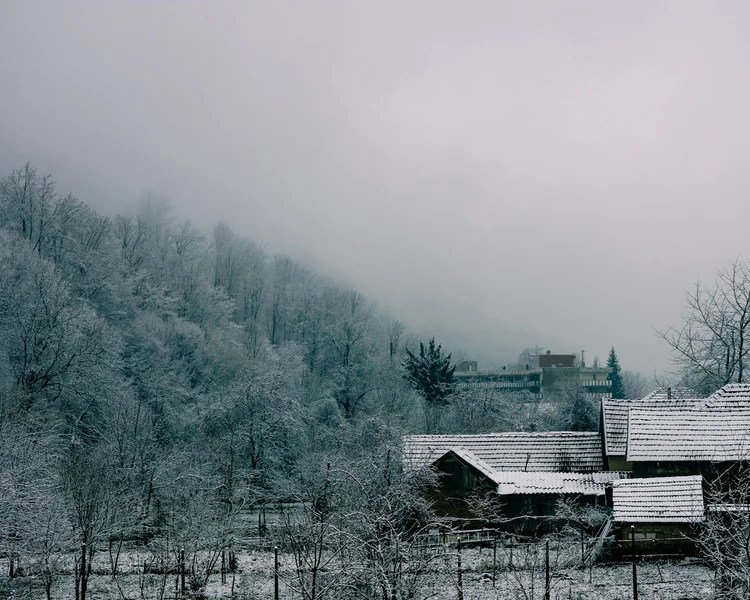
All was silent except for the “swish, swish” of my cross-country skis through the carefully groomed tracks in the shiny snow and the occasional screech of a hawk. My elevated heart rate and the endorphin rush of using my muscles that were tired of sitting at my desk lifted my mood.
Each glide of my skis became a prayer as my heart praised God for His creation. I was surrounded by trees, snow, a frozen pond, and a brook that bubbled underneath the nearby ice.
Occasional animal tracks near the ski tracks accented my path. Things had been stressful in ministry recently, but none of that mattered now. I was able to leave it with the Lord and just praise Him.
When God called us to Vermont, I hoped that I would be able to cross-country ski someday. I had done it a couple of times and enjoyed it. I didn’t realize that our kids would soon be part of a community cross-country club similar to community soccer teams. I didn’t have any way of knowing then that my oldest son would start a nordic ski team at the local high school. I didn’t know at the time that we would all wish for more snow clear into March, hoping for a little more skiing.
Cross-country skiing has been one way that God has helped me to embrace the “place” that our small town is situated in. Over a decade ago, as we settled here and I came to love and enjoy our community, I didn’t realize how much embracing “place” would become a means of endurance in ministry.
Embrace Place by Enjoying Creation
As pastors and ministry leaders, we know that God reveals truths about Himself through creation. Romans 1:19-21 and Psalm 19:1-6 are just starting points for understanding that through creation “day to day pours out speech, and night to night reveals knowledge” (Psalm 19:2). As preachers and teachers of God’s Word, we rightly place an emphasis on our study of the Book that God has given us to proclaim. Yet, we can easily fall into almost ignoring what many of the Church Fathers and Reformers called the “second book of revelation,” God’s creation. 1
When was the last time that you gave yourself time to be refreshed with a walk outside, noticing the way the trees look this time of year, or the last time you went for an evening walk during the summer to be dazzled by a firefly show in a nearby field? One of the privileges of rural ministry is that we are generally not quite as removed from God’s creation as those in city ministry.
Often, all we have to do to be amazed at what God has made is to step outside. This could look like a hike, a walk, a run, a bike ride, a kayak, or simply a drive with your wife for no other reason than to find beauty together.
Spurgeon, who of course was an urban pastor, encouraged his ministry students to get outside more: “A day’s breathing of fresh air upon the hills, or a few hours ramble in the beech woods’ umbrageous calm, would sweep the cobwebs out of the brain of scores of our toiling ministers who are now but half alive…[It] would not give grace to the soul, but it would yield oxygen to the body, which is next best.” (Lectures To My Students)
At the risk of sounding cynical, one reason that ministry leaders especially should embrace the “place” that God has stationed them in through enjoying creation is because nature doesn’t need you to counsel it or teach it or sort out relationship problems. The woods don’t require marriage counseling, but some of the members of your congregation do. Enjoying the parts of God’s creation that breathe life into you is one way to be in awe of God, and because of that to be able to serve your church members and community better.
Embrace Place by Looking for the Good in Your Community
Another way enjoying the “place” that you serve can give you endurance is by looking for the good in your community. Of course, looking for the good in your church community is always a helpful practice. But broaden your search for the good sometimes by looking out into your community and noticing what is good.
In my area, there are many hard-working people who embody the Christian work ethic, even if they are not believers. Their hard work inspires me to work hard myself, to teach in my church on why it is important to both rest hard and work hard, and to point it out to my kids when it is noticeable and commendable.
What are some of the “common graces” that you see in the life of your community? Is there an emphasis on music or the arts that you or your family can participate in or enjoy? Are there organizations doing good for others, like a robust food pantry or meals for seniors? Is there a nice library with programming that your kids enjoy? Are there good youth sports opportunities?
Looking for what is good in our communities reminds us that we are part of something bigger than ourselves and our church. Yes, the church is the primary community where God forms us and gives us close relationships. But your church is in a “place.” The people you are trying to reach with the gospel are in a “place.”
Appreciating your inner-connectedness and the good that is happening in your community reminds you that both believers and unbelievers are human beings made in God’s image. It can help you to endure in ministry by growing in thankfulness for what you have where you live instead of what you don’t have.
I love where I live. I have no desire to leave, but I trust that if that time comes, God will make it clear.
Yet I do know this: for as long as God has me here, I want to be faithful. And I want to enjoy where I live. Whether I am buried here or have just a few more years ministering the gospel here, I want to live life to the fullest as both a pastor and a person.
One way to do that is by embracing the “place” that God has placed me in. His sovereignty tells me that “here” is no accident. So even outside of my church community I will enjoy it to the fullest, marveling at His creation in these Green Mountains and looking for good things right where I live and serve.
Endnotes
1. https://reasons.org/explore/publications/nrtb-e-zine/historic-christianity-s-two-books-of-revelation

 He Must Become Greater