Four Blessings to Ask God For in 2025

This article first appeared at Small Town Summits Articles.

Father, as we sail out upon the unknown waters of 2025, we are reminded of past years that held joys and trials and we are a bit weary. It could be a year of smooth sailing and joy that easily points us to you, the giver of all good things (James 1:17). But life in this fallen world is so uncertain. What life-changing squalls could hit with hardly a moment’s notice?

Jesus, we know that you are our captain and that you are Lord over the storms. So, with you in our boat, we cry out to you, asking you to work in our lives, our church and our family in 2025.

We ask these things with boldness, knowing that the same Jesus who heard the cries of the disciples and asked where their faith is hears us today (Romans 8:34). Jesus, we believe—help our unbelief (Mark 9:24)! We serve you in faith, believing that you not only exist, but that you reward those who earnestly seek you (Hebrews 11:6). Lord, may you be our reward as we seek you today and look ahead to 2025.

We ask for four blessings from your hand in 2025—hope, peace, joy, and to see Jesus’s glory.

Give Us Hope

Give us hope that you are working all things for our good (Romans 8:28). Give us hope that you are forming us to look more like Jesus even though we get so impatient with our progress in sanctification sometimes (Romans 8:29).

Give us hope that the Word is doing its work in other church member’s lives and that you are at work in our community even when we can’t see it (Mark 4:26-29). Give us hope that you will never abandon your church (Matthew 16:18) and that you will use us, but that gospel ministry is not reliant upon us (1 Corinthians 15:58).

Give us hope that you are cheering my spouse and I on each time that we move towards each other (Song of Solomon 5:1b). Give us hope that you are working in my spouse’s heart and life and that you are forming his or her character into a beautiful work of art that belongs to you (Ephesians 2:10). Give us hope that you hold each of my children in your hands and that no one can snatch them out of your hands (John 10:28-29).

Give us hope that you can do more than we can ask for or imagine in our walk with you, in our church, and in our family in 2025 (Ephesians 3:20-21)!

Give Us Peace

Give us peace, knowing that we can sleep because you never sleep, always watching your own (Psalm 121:3-4). Give us peace as we navigate our own doubts and fears (Matthew 10:31). Give us peace that can only be found in knowing you personally, as we pursue you even more than we have in past years (Psalm 119:10).

Give our church peace in conflict that may arise in 2025, and give us a heart to seek the unity of the Spirit (Ephesians 4:3). Give us peace as we navigate the complexity of being believers in today’s world (2 Corinthians 11:28). Give our church a greater measure of the peace that comes from resting in Jesus (John 14:27).

Give my spouse and I peace if financial or health or extended family situations arise this year that add stress to our marriage (Isaiah 26:3). Give our home peace and may our children and grandchildren grow in enjoying their relationships with each other (Psalm 133:1). Give our children your spiritual protection from the evil one, so that they can experience the peace that comes from walking with you in a tumultuous world (John 17:15).

Give Us Joy

Give us joy, knowing that joy is always available in Jesus regardless of what circumstances may come in 2025 (John 15:11, 16:20). Give us your joy in the happy days, and the eyes to see the world as a place where your beauty and power are constantly on display (Psalm 24:1). Give us joy in trials, knowing that you have not abandoned us and are producing Christ-like character in us (James 1:2-3, Romans 5:3-5).

Give our church joy so that when unbelievers visit, they will want this joy that the world cannot offer (Luke 2:10). Give our church joy that is not surface-deep but rather that is deep like a glacier, because it is joy in God (2 Corinthians 1:24). Give our church joy that is Spirit-produced as we worship the living God on Sunday mornings together (Psalms 4:7).

Give us joy in our marriages, as we seek to enjoy life with the spouse you have given us (Ecclesiastes 9:9). Give our spouses joy in their day-to-day responsibilities and in their ministry opportunities (Romans 15:13). Give our children joy through spiritual tastebuds that savor Jesus rather than sin (Psalm 16:11).

Give Us Jesus’s Glory

In the same way that Moses did not want to move into the Promised Land without viewing your glory (Exodus 33:14-18), we don’t want to move into 2025 without a fresh view of Jesus’s glory!

Give us Jesus’s glory in our times of Bible reading and prayer in 2025, so that we can take a spiritual drink and be satisfied (John 7:37-39). Give us Jesus’s glory through seeing your salvation in our personal witnessing with friends and community members (Luke 5:25).

Give our church a view of Jesus’s glory that is so breathtaking that they will want to run from sin (1 Peter 1:13-16). Give our church the focus that church is about Jesus’s glory, not their preferences or ease (1 Thessalonians 5:14). Give our church such a sense of Jesus’s glory on Sunday mornings that they will long for the next time of worship together (2 John 1:12).

Give our families a view of Jesus’s glory that comes from having a privileged front-row seat to your work in so many lives (Acts 2:43). Give our children Jesus’s glory so that they have mountain-top spiritual experiences, but also we ask that when they come down from them that they will have eyes for Jesus only (Matthew 17:8).

Father, we recognize that we don’t deserve any blessing from you. But we also know that you love to give good gifts to your children (Matthew 7:11). So, we are asking you today to give us, our family, and our church four things in 2025: give us hope, give us peace, give us joy, and give us Jesus’s glory!

Don’t Be Afraid to Question What We’ve Been Told

Photo by asoggetti on Unsplash

This article was featured in the Opinion section of The Manchester Journal.

It used to be that it was countercultural to question what we had always been told about God by the Bible. But today, it is countercultural to question what we have always been told about God by our culture.

My wife and I recently brought our kids to see the movie Smallfoot and by the end of the movie I found myself thinking about the countercultural claims of Christianity. The movie is about a community of Yetis who live high up in the mountains. One day, one of them discovers a “smallfoot,” a human. Even though the human is carried away by his parachute, the discovery won’t leave the Yeti’s mind and he begins to tell everyone. That is when the community stone keeper comes out of his cave and reminds everyone of what the stones say. He wears a huge robe of stones that have certain “truths” engraved upon them. One of the stones proclaims that there is no such thing as a smallfoot–end of story.  Another stone says that Yetis shall never go below the clouds. Eventually, however, the Yeti finds a human below the clouds, at a village at the base of the mountain. It is then discovered that the stone keeper has been protecting an elaborate cover-up and that even the clouds that surround their mountain community are not real. The Yetis discover that there is a whole different world below the clouds.

Any American with religion on his or her mind who watched this movie maybe even fifteen years ago, would have thought of religious leaders as the stone keepers of our own communities. Christians were often seen as people who believed in an elaborate cover-up. But today, things have changed.

The “stone keepers,” the keepers of “truth,” in our communities are usually not seen as Christians anymore, but rather anyone who proclaims that there is no God. From before we are even able to read or write, we are now told over and over and over by the media, by textbooks, and by government officials, not only that there is no God, but that he is a topic that is off limits.

If anyone brings up God in a public discussion, that person is immediately told something along the lines of “separation of church and state forbids that.” But the lines of community life and state life are so often blurred in our public conscience now. People are more and more afraid to even say “God” in public anywhere, let alone discuss him.

However, there are curious minds who are questioning what they’ve been told. The Bible talks about this. Romans 1:19-20 explains, “For what can be known about God is plain to them, because God has shown it to them. For his invisible attributes, namely, his eternal power and divine nature, have been clearly perceived, ever since the creation of the world, in the things that have been made. So they are without excuse.” God says in the Bible that everyone knows that he exists, even if we like to say that he is not up for discussion anymore.

So don’t be afraid to question what we’ve been told. As we come up to Thanksgiving, don’t be afraid to think about the fact that what you have been told may be wrong, and there may be a God who does need to be thanked. As we come up to Christmas, don’t be afraid to crack a Bible open and read in the Gospel of John about a man named Jesus whom we are told was not only a man but also God in the flesh (John 1:14), and in fact “God with us” (Matthew 1:23).

Don’t be afraid to peek beneath the clouds and see that there is a whole different reality out there that you may be missing. You might have your mind blown. And your soul saved.

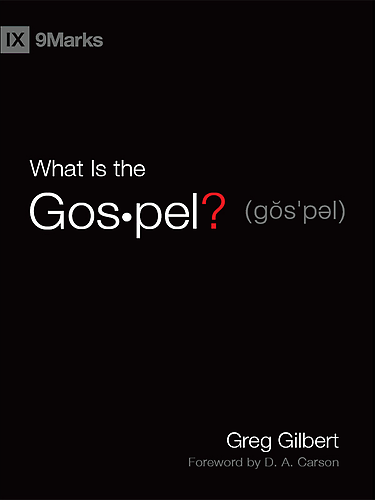
What is the Gospel?

image

There is way too much confusion about the Gospel.  If we as Christians are basing our entire lives on the truth of the Gospel, should it not be crystal clear in our minds?  I am embarrassed to tell you one of my moments of un-clarity regarding the Gospel:  the Pastor that I worked with in New Mexico asked me one day how I would share the Gospel with somebody that I was sitting next to in an airplane if the plane was going to crash.  I had been in full-time ministry for over 3 years at that point and let me tell you, I was hoping that imaginary airplane was flying high at cruising altitude when the engines failed!  I was able to share it biblically faithfully as I had many times when the Lord gave me opportunities, but not concisely.

How about you?  When you have only a few minutes but a clear opportunity or even someone asking you to share the Gospel, do you know where to start and finish?  What are the non-negotiables that they need to know in order to truly be saved?  Are you teaching the Gospel to your children constantly?  Do you thank God regularly for what He has done for you in Christ because it is often on your mind?  We need the Gospel to be emblazoned upon our hearts and ready on our lips!

When I recently attended the Shepherd’s Conference at Grace Community Church where we are members, I had a list of several kinds of books that I was looking for at the Conference Book Store.  At the top of my list was a book about the Gospel.  I knew that after 4 1/2 years of studying more than I thought possible to be as equipped as I could be for full-time ministry, that I needed to step back and see the big picture.  I also knew that I want to be laser-sharp on what the Gospel is in my ministries now and as I look ahead to full-time ministry.  If I could go back and change only one thing in the almost 6 wonderful years of being a Youth Pastor before seminary, it would be to preach and explain the Gospel more often and more clearly.  Paul the Apostle taught the whole counsel of God, and yet there was a sense in which he could say to the Corinthians, “For I decided to know nothing among you except Jesus Christ and Him crucified” (1 Corinthians 2:2).

I found exactly the book that I was looking for in the little book What is the Gospel? by Greg Gilbert.  So, what IS the Gospel??  This is the most important question that you will ever ask, as well as the most important question that you will ever answer.  I agree with Gilbert as he shows that Scripture breaks it into 4 basic truths:

1) God.  We are accountable to the God who created us.  He is both Creator, and holy and righteous (Genesis 1:1, Psalm 24:1, Matthew 5:48).

2) Man.  We have sinned against that God and will be judged (Romans 3:10, 6:23; Isaiah 59:2).

3) Christ.  But God has acted in Jesus Christ to save us.  God sent Christ as both fully God and fully man, and as God’s perfect Son He died on the cross to pay the penalty for sin and then rose from the dead (Colossians 2:9, Romans 5:8, 2 Corinthians 5:21, 1 Corinthians 15:4).

4) Response.  We take hold of that salvation by repentance from sin and faith in Jesus (Isaiah 55:7, Luke 9:23, Romans 10:9, Acts 17:30).

Look at all 4 principles laid out clearly in Romans 3:23-25a, “…for all have sinned and fall short [man] of the glory of God [God], and are justified by his grace as a gift, through the redemption that is in Christ Jesus , whom God put forward as a propitiation by his blood [Christ], to be received by faith [response]…”

It was said in many different ways all throughout God’s Word.  Sometimes it was assumed that part of it was already believed, such as that God was Creator and Judge to a Jewish audience.  But these 4 basic principles are always in the background or in the forefront of a complete Gospel presentation.

As Gilbert points out, another way of looking at these 4 truths is how they answer 4 crucial questions that Paul lays out in Romans 1-4:

“1) Who made us, and to whom are we accountable? [God]

2) What is our problem?  In other words, are we in trouble and why? [Man]

3) What is God’s solution to that problem?  How has he acted to save us from it? [Christ]

4) How do I–myself, right here, right now–how do I come to be included in that salvation?  What makes this good news for me and not just for someone else? [Response]”

As I look at the precious and glorious answers to those four questions, I am reminded of the simplicity of the Gospel and yet its’ profundity.  The Good News of Jesus Christ is simple enough for a child to understand, and yet complex enough to write a doctoral dissertation on each of these points and still not plumb the depths!

It is also easy to notice that the Gospel is made up of both bad news AND good news.  In our society of “whatever you believe is true, is true for you” philosophy, and generous tolerance of any belief except for Christianity, I am afraid that we are too ready to soften the parts about us being accountable to God the Creator, the depth of our sin, or the fact that our King was crucified on a wooden Roman instrument of torture over two thousand years ago and then actually rose from the dead.  It is especially hard for people who have been taught all of their lives that man is essentially good to understand what they need to be saved from.  It is equally hard in our day to explain to those who have a “Santa Claus” view of God that He is not only a God of unfathomable love but also unfathomable holiness, and their Judge.  Yet that is exactly what people need to hear.  The whole, simple, profound, true, cutting, crushing, revealing, surprising, loving, saving, and gracious Gospel of Jesus Christ!

Let’s take note of Gilbert’s alarm: “Indeed I believe one of the greatest dangers the body of Christ faces today is the temptation to rethink and rearticulate the gospel in a way that makes its’ center something other than the death of Jesus on the cross in the place of sinners.”

If you teach Sunday School, if you have children, if you preach, if you have neighbors or co-workers or relatives who need to hear the Gospel (we all do), or if you just need to think clearly and deeply about the Gospel (we all do), I encourage you to read this book, and soon!  I know that you will devour it as I did, and that it will result in more praise to Jesus Christ.  As Gilbert explains, “An emaciated gospel leads to emaciated worship.  It lowers our eyes from God to self and cheapens what God has accomplished for us in Christ.  The biblical gospel, by contrast, is like fuel in the furnace of worship.”  I am thankful for this book, because having a precise and lucid understanding of the biblical Gospel “calls us forward to that final day when heaven will be filled with the roaring noise of millions upon millions of forgiven voices hailing him as crucified Savior and risen King.”