A Worthy Resolution: Living for the Fame of Jesus Christ in 2014!

Recently my 6 year old son surprised me by asking me to “send a picture of you and I to everyone in the world, which everyone would like and would make us really famous.”  I agreed that I would send it to family, but reminded him that the most important thing is for us to make Jesus famous instead of ourselves, and he agreed.  But it did make me pause and think…where did this idea comecross and sunset from?  My wife and I are both on Facebook, but we don’t obsess over how many people “like” a picture that we post.  I realized that my son is growing up in a world where he not only expects to see pictures instantly, but also for at least some of those pictures to end up somewhere on the internet where, if friends and family like them, why not everyone?  He is growing up in a world saturated with social media and reality shows where truly everybody wants to be famous.

Reminding him that we live to make Jesus famous, not ourselves, was not simply a way for me to “shepherd my child’s heart,” but a divine appointment as I am still examining my own heart a few days later.  Am I living to make Jesus famous above all else?  This idea goes far beyond social media, instant pictures, and TV.  This idea goes to the very core of who we are and what we are living for, and on the eve of 2014 I can think of no better resolution than to live for the fame of Jesus Christ more than ever this year.

While words like “glory” and “praise” are used much more often to describe the honor that Jesus Christ as Savior and Lord should receive, the word “fame” is used as well in the Bible.  Moses talks about the fame that the LORD had among the surrounding nations (Numbers 14:15), and Psalm 145:7 sings to God about generation after generation pouring “forth the fame of your abundant goodness” and singing “aloud of your righteousness.”  In the New Testament, the Gospels talk about Jesus’ fame spreading throughout certain regions, often after He taught or did miracles (Matt. 4:24, 9:31, 14:1, Mark 1:28).  As the “gospel of the kingdom” spread, “His fame spread…” (Matthew 4:23-24)

If my highest goal is to spread the fame of Jesus Christ then this will affect how I live in my home, at work, in my friendships, with extended family, in my church, in my neighborhood, and with a desire for His fame to spread around the world.  Maybe it is time for you to refocus.  Jesus died and rose again “that those who live might no longer live for themselves but for Him who for their sake died and was raised.” (2 Corinthians 5:15)  There truly is no greater resolution.

Joseph: A Young Man Who Followed God

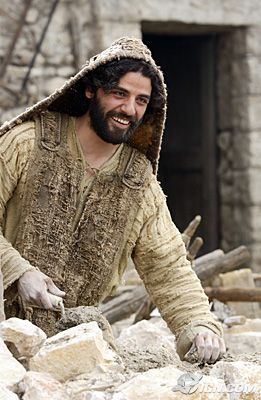
josephLast Christmas I wrote about Mary as an example of a teenager who loves God.  There are also things we can learn for our walk with God by thinking about God’s work in Joseph’s life as a young man.  While most agree that Mary was probably a teenager when Christ was born, some believe that Joseph was a much older man than her.  The Bible simply does not tell us, but this idea probably came from the fact that the Gospel accounts do not talk about Joseph once Jesus is mature (Harper’s Bible Dictionary, p. 506).  It is true that Joseph had almost certainly died by the time Christ died on the cross (John 19:26-27), but this does not necessarily mean that Joseph was much older than Mary when the angel announced to Joseph that the Messiah would radically disrupt his life and plans.

As a young man, Joseph wanted to follow God.  Matthew 1:19 describes Joseph as “being a just man.”  When the Bible describes somebody as “just” or “righteous,” it should perk up our ears.  There is certainly something we can learn from this person’s life.  The way that Joseph responded to God’s working in his life is something that we can all learn from.

As a young man, Joseph put others before himself.  The Gospel writer next gives an example of this following after God that characterized Joseph: Deuteronomy 22:13-21 would have allowed Joseph to submit Mary to a public trial and even stoning if she was found guilty of sex outside of marriage.  Instead, Joseph, being “unwilling to put her to shame, resolved to divorce her quietly.” (Mt. 1:19)  His plan was to show Mary grace by quietly breaking off their betrothal.  In a culture that increasingly doesn’t expect a young man to think of others until he is in his thirties and married with children, Joseph’s example should remind us that teenagers and twenty-something Christians have a special call to be “children of God without blemish in the midst of a crooked and twisted generation, among whom you shine as lights in the world, holding fast to the word of life…” (Phil. 2:15b-16a)

As a young man, Joseph’s daily walk with God empowered him to follow God in the “big things.”  Joseph did not suddenly start to follow the Lord the day that the angel appeared to him in a dream and told him, “Joseph, son of David, do not fear to take Mary as your wife, for that which is conceived in her is from the Holy Spirit.” (Matt. 1:20)  When Joseph woke up and immediately “…did as the angel of the Lord commanded him,” (Matt. 1:24) no matter what the social consequences would be, it was because he had already been following God for years.  It was the same with when he moved his family to a foreign country overnight because of another command from God in order to protect Jesus as a baby from King Herod.  When life-changing circumstances arose, Joseph did not need to think long about how to follow the Lord.  He simply obeyed because his spiritual reflexes had been trained over years as a child and teenager (1 Tim. 4:7-8).

Joseph and Mary both are great examples, but they both were sinners in need of a Savior (Luke 1:47), the very Savior whose arrival into their lives put their faith to the test.  This Christmas, do not forget your constant need of Christ.  He is the One who has saved “His people from their sins” (Matt. 1:21), and He is the One who is worthy of following, both every day, and in the big things.

Thanksgiving In (Not in Spite of) Suffering

thanksgiving in sufferingAlthough there were many Thanksgiving feasts and observances throughout the United States for almost two and a half centuries before Lincoln, the nationally recognized holiday that we will soon celebrate was put into place in the middle of the Civil War.  President Abraham Lincoln proclaimed a national Thanksgiving Day in 1863, while the war was raging and the country was truly divided.  While citizens were becoming widows and orphans daily, Secretary of State William Steward wrote:  “I do therefore invite my fellow citizens in every part of the United States, and also those who are at sea and those who are sojourning in foreign lands, to set apart and observe the last Thursday of November next, as a day of Thanksgiving and Praise to our beneficent Father who dwelleth in the Heavens.”

Even in the midst of great pain and hardship, they were recognizing what 1 Thessalonians 5:16-18 commands:  “Rejoice always, pray without ceasing, give thanks in all circumstances; for this is the will of God in Christ Jesus for you.”  One of the ways that they gave thanks in all circumstances, even horrible ones such as civil war, was by looking to blessings that God had given:

The year that is drawing towards its close, has been filled with the blessings of fruitful fields and healthful skies. To these bounties, which are so constantly enjoyed that we are prone to forget the source from which they come, others have been added, which are of so extraordinary a nature, that they cannot fail to penetrate and soften even the heart which is habitually insensible to the ever watchful providence of Almighty God. In the midst of a civil war of unequalled magnitude and severity, which has sometimes seemed to foreign States to invite and to provoke their aggression, peace has been preserved with all nations, order has been maintained, the laws have been respected and obeyed, and harmony has prevailed everywhere except in the theatre of military conflict…

They were looking for God’s good providence and for things to be thankful for, so that God would be praised no matter what, recognizing that He is the giver of all good things (James 1:17).   I recently taught a Bible study on Philippians 1:29, “For it has been granted to you that for the sake of Christ you should not only believe in him but also suffer for his sake…”  The word “granted” is the same word used in Romans 8:32 about God graciously giving us all things:  “He who did not spare his own Son but gave him up for us all, how will he not also with him graciously give us all things?”  We expect God to “graciously give” us blessings, but we often don’t understand how suffering could be a grace gift.

One answer is because God uses it all.  Nothing is wasted in God’s providence.  “And we know that for those who love God all things work together for good, for those who are called according to his purpose.” (Rom. 8:28)  This is why the Apostle Paul could write, “Now I rejoice in my sufferings…” (Col. 1:24).  As our Senior Pastor preached on Colossians 1:24-29 recently, he asked, “Who talks like this?  Rejoicing in our sufferings?  Christians do!”

We can bubble over with genuine thanksgiving at any time if we look to the blessings God has given us, even if mixed with suffering.  Our God is both sovereign and good.  He is the God who promised Romans 8:28, a promise that rests on the bedrock of Romans 8:1, “There is therefore now no condemnation for those who are in Christ Jesus.”  Blessings.  Thanksgiving.  Hope.  Even in Civil War.

Above All Things, See to it That Your Souls Are Happy in the Lord!

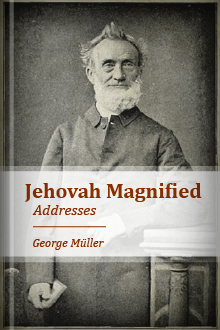
“The welfare of our families, the prosperity of our business, our work and service for the Lord, may be considered the most important matters to be attended to; but, according to my judment, the most important point to be attended to is this:  Above all things, see to it that your souls are happy in the Lord.  Other things may press upon you; the Lord’s work even may have urgent claims upon your attention; but I deliberately repeat, it is of supreme and paramount importance thJehovah-Magnified Mullerat you should seek, above all other things, to have your souls truly happy in God Himself.  Day by day seek to make this the most important business of your life.  This has been my firm and settled conviction for the last [35] years … The secret of all true effectual service is–joy in God, and having experimental [i.e. experiential] acquaintance and fellowship with God Himself.

But in what way shall we attain to this settled happiness of soul?  How shall we learn to enjoy God?  How obtain such an all-sufficient soul-satisfying portion in Him as shall enable us to let go the things of this world as vain and worthless in comparison?  I answer, this happiness is to be obtained through the study of the Holy Scriptures.  God has therein revealed Himself unto us in the face of Jesus Christ.

In the Scriptures, by the power of the Holy Ghost, He makes Himself known unto our souls.  Remember, it is not a god of our own thoughts or our own imaginations that we need to be acquainted with; but the God of the Bible, our Father, who has given the blessed Jesus to die for us.  Him should we seek to intimately know, according to the revelation He has made of Himself in His own most precious Word.”

George Muller’s writing in “The Secret of Effectual Service to God” (an address in the book, Jehovah Magnified) was food for my soul this morning.  There are so many things that cry out for my attention each and every day.  Many of these are joys and responsibilities that God not only wants me to engage in but even commands me to be fully engaged in–such as my family and ministry.

But, how do I fully and joyfully engage in these responsibilities in a way that brings the most glory to Jesus (Col. 3:23-24) and also the most happiness to myself and others (Psalm 100:2)?  As Muller exhorted, by above all things, seeing that my soul is happy in the Lord–which will happen through seeking His face in His Word.

Jehovah Magnified: Addresses, which includes the address: “The Secret of Effectual Service to God” quoted above, is available free the entire month of September, 2013 from Logos Bible Software.

It is too much!

As followers of Christ, we often forget all that God has planned for us–we have a hopeful future so glorious that we cannot take it all in now.  “For now we see in a mirror dimly, but then face to face.” (1 Corinthians 1sunrise with tree3:12)  This is one reason that we need God’s Word to not only inform our minds, but also to warm our hearts.  We need God’s truth to not only instruct us now, but also to point us forward through our present to what God is preparing us for.  This is what 1 John 3:2 has done for me recently:  “Beloved, we are God’s children now, and what we will be has not yet appeared; but we know that when He appears we shall be like Him, because we shall see Him as He is.”

Today, fellow believer in our resurrected King Jesus, you are God’s child.  If you are in Christ you will never more be God’s child than you already are now.

But God went even further, even beyond bringing us into an intimate family relationship as His child.  He wants us to be near Him.  He has completely reconciled us to Himself through what Christ did on the cross, and that includes our future hope of glorification!  When people see the resurrected Christ in the Bible, they fall down out of fear because they are overwhelmed at His majesty, and at His holiness and their sinfulness (Revelation 1:17).  We may fall before Jesus’ feet when He appears at His Second Coming just out of sheer worship and praise and adoration and love and awe–but it will not be out of fear–because He will change us.

The Apostle John lovingly reminds us that although we cannot fully comprehend what we will be when Christ comes back at His Second Coming, we can know this: “we shall be like Him.”  We will finally be sinless, and we will have transformed, glorified resurrection bodies!

A missionary was working with a tribe that had received the gospel fairly recently, and as he was translating 1 John a scribe was making a copy.  When the missionary told him to write, “…we know that when He appears we shall be like Him, because we shall see Him as He is,” the scribe threw down his pen and exclaimed, “No!  It is too much!  Let us write, ‘when He appears we shall kiss His feet.'”  He was right.  It is too much.  Our God lavishes His grace on us in Christ.  Are you overwhelmed with praise at these precious promises?

In Memory of Our Family Friend Leona

I had the privilege of preaching the Memorial Service message for our dear family friend Leona. I’m posting the message here in an effort to honor Leona
and give glory to the Lord.
***
Memorial Service Message for Leona
This is the Day Which the Lord Hath Made:  Rejoicing & Gospel Hope
June 8, 2013

The first time I met Leona, I was two days old at St. Joseph Hospital here in Bellingham.  Leona and her husband Al were good friends and ministry partners with my Grandparents, Cordell and Virginia Baker.  There was never really a time in my life, especially growing up, that I did not know Leona, because I would see her every time that I visited my Grandparents whether in Bellingham, Toelle (Utah), or Walla Walla.

My family and I were richly blessed by Leona in more ways than I can share today.  The impact that Al and Leona had on my Grandparents’ ministry alone is impossible to calculate.  Al and Leona moved from Bellingham to Utah to support my Grandparents in home missions.  After Al passed away Leona stayed in Utah for a decade, living in a condo under my Grandparents’ condo for many of those years, until my Grandparents moved to Walla Walla.

She was such a good friend to them that she followed them to Walla Walla and lived there for years before later returning to Bellingham.  My Grandma called Leona her best friend.  Only the Lord knows the ministry encouragement, the people saved, and the spiritual fruit in people’s lives that happened because of her direct ministry to other people as well as her ministry to my Grandparents.

There are six specific traits that I personally remember about Leona as I think back over all of those years:

She was a hard worker.
She was a life-long nurse.
She had more energy than almost anyone I have ever met.
She was never late.
She had a contagious grin.
She had a strong faith and trust in the Lord Jesus.

There are probably very few in this room that don’t remember her smile and nod and her characteristic phrase after any plans were made, “Lord willing.”

That’s why it was no surprise to me to learn from her son Craig and daughter-in-law Judi that Leona’s favorite verse, printed on the front of your bulletin, was Psalm 118:24,
“This is the day which the Lord hath made; we will rejoice and be glad in it.”

For Leona, life was meant to be lived with joy and trust in Christ.  Even in times of sorrow, the Apostle Paul’s phrase in 2 Corinthians 6:10, “sorrowful yet always rejoicing” seemed to be a mantra for Leona.

Craig and Judi shared a special time that they spent with her earlier this year.  She was having an especially hard day and the effects of Alzheimer’s were making it hard to say any words at all.  Yet, Leona suddenly declared, “This is the day which the Lord hath made; we will rejoice and be glad in it.”  It came out of her soul, an expression of praise to her God even as she went through the deepest trial of her life.

The best way that we can honor Leona today and also give glory to the God that she praised is by agreeing with Leona and the Psalmist, “This is the day which the Lord hath made; we will rejoice and be glad in it.”

But the kind of rejoicing that Leona expressed and that the Psalmist is talking about is not some sort of vague rejoicing or hope that is grounded on shifting sand.  Rather, it is what the Apostle Paul talks about in 1 Thessalonians 4:13-18:

But we do not want you to be uninformed, brothers, about those who are asleep, that you may not grieve as others do who have no hope.  For since we believe that Jesus died and rose again, even so, through Jesus, God will bring with him those who have fallen asleep.  For this we declare to you by a word from the Lord, that we who are alive, who are left until the coming of the Lord, will not precede those who have fallen asleep.  For the Lord himself will descend from heaven with a cry of command, with the voice of an archangel, and with the sound of the trumpet of God.  And the dead in Christ will rise first.  Then we who are alive, who are left, will be caught up together with them in the clouds to meet the Lord in the air, and so we will always be with the Lord.  Therefore encourage one another with these words.

This is why her son Craig put the words on the front of the bulletin, “Born September 26, 1925 … Graduated to Heaven April 13, 2013.”  Leona knew without a doubt that Jesus had died for her and risen again, and lived in a way that showed her belief.  She could say no matter what was happening, “This is the day which the Lord hath made, we will rejoice and be glad in it” because of the rock solid hope of the Gospel.

She knew and believed, and wanted others to know and believe, what is printed in the bulletin you hold in your hands, that “all have sinned” and that we need a Savior.  We cannot save ourselves.  The Bible says in Romans 6:23 that sin results in eternal death.

We need to repent of our sins, trusting only in Christ’s complete sacrifice on the cross.  The only way that we can have the kind of rock solid hope that Leona knew is by putting our faith in Christ alone for salvation.  Romans 10:9 says, “That if you confess with your mouth Jesus as Lord, and believe in your heart that God raised Him from the dead, you shall be saved.”

That is why we can grieve–because we miss Leona–but we can grieve as those who do have hope.  The family’s prayer is that each person would leave even this Memorial Service today trusting in Jesus Christ for salvation, believing that He died on the cross for your sins and rose again.  That is why we as Christians would put “This is the day which the Lord hath made, we will rejoice and be glad in it” on the front of a Memorial Service bulletin.

Leona believed years ago what Romans 8:38-39 declares, “For I am sure that neither death nor life, nor angels nor rulers, nor things present nor things to come, nor powers, nor height nor depth, [I would remind us—nor Alzheimer’s], nor anything else in all creation, will be able to separate us from the love of God in Christ Jesus our Lord.”

Leona loved Christ so much and so looked forward to Heaven that she told my Mom years ago that she wanted her to play the song, “Ship Ahoy” on the piano at her Memorial and that she wanted Wes to sing it.  That love for Christ was in response to a God who loved her and saved her and held onto her.

There’s a truth in this song that Leona chose, that we need to make sure we hear.  Being saved from her sins by Christ Jesus her Savior when she was 30 years old in 1955, the same day as her husband Al, changed her and she wanted others to know and experience this salvation in Christ too.  Listen to these words that she wanted us to hear today:

The good Captain commanded a boat to be low’red,
And with tender compassion He took me on board;
And I’m happy today, all my sins washed away
In the blood of my Savior, and now I can say:
“Bless the Lord! Bless the Lord!”
From my soul I can say: “Bless the Lord!”

O soul, sinking down ’neath sin’s merciless wave,
The strong arm of our Captain is mighty to save;
Then trust Him today, no longer delay,
Board the old ship of Zion, and shout on your way:
“Jesus saves! Jesus saves!”
Shout and sing on your way: “Jesus saves!”

When I think of Leona, I think of a life well lived.  She loved her husband Al for over 43 years, she raised 3 children—Craig, Ross, and Lynn—and she loved her grandchildren dearly and would glow when talking about them.

I remember playing basketball with Leona’s grandson Michael while he visited her for the Summer, and her granddaughters Holly and Heather are both missionaries.  Leona loved serving others and that is evident in her family.  We all remember Leona as a nurse, passionately caring for others and trying to help them heal for over 50 years.

The Lord sometimes placed Leona in just the right place at the right time.  Once she performed mouth to mouth resuscitation on her daughter Lynn from South Lake Whatcom all the way to the Sedro Wooley hospital and saved her life.  Another time she saw a young child chocking in a grocery store with a hysterical mom that did not know what to do.  Leona quickly performed the Heimlich Maneuver and saved the child’s life.

Even after retiring as a nurse in her 70s I remember being amazed but not surprised when I heard that Leona was volunteering at a hospital in Walla Walla.  Some of her caregivers at Christian Health Care Center in Lynden were people that she had trained.  She loved to serve others and that flowed out of the love that she had for the Lord.

Everyone who knew Leona well knew that she was always early.  I remember walking past her car and seeing a suitcase in the back.  When I asked her where she was going, she replied, “Oh, I’m going to visit Bellingham in 10 days.”  I’ve never met anyone who was so early all the time.  If my family was inviting her over to a special Sunday afternoon dinner like Easter and my Mom wanted her to arrive at 1:00, she would tell her that dinner was at 2:00 because we all knew that if you told Leona 2:00 she would arrive at 1:00.

But, Leona was right on time early in the morning on April 13th when the Lord said, “Leona” and she knew His voice as she closed her eyes and stepped into glory.  She experienced at that moment and is experiencing now what she had believed for so many years, “to live is Christ, and to die is gain.”  In Christ, death is swallowed up in victory!

This is why we say even through tears today, “This is the day that the Lord has made, we will rejoice and be glad in it.”

What Does the Resurrection Have to Do With Ministry?

picture 18I have a friend in Juarez, Mexico who is a native Mexican pastor of a small, poor church in the outskirts of the city.  He and his beautiful family have gone where most would fear to live and have planted a thriving church that loves the Lord and that loves to share the Gospel.  I had the privilege of visiting him often when I lived in Albuquerque, and there was one verse that we would often remind each other of as an encouragement when ministry was hard.  First Corinthians 15:58 declares, “Therefore, my beloved brothers, be steadfast, immovable, always abounding in the work of the Lord, knowing that in the Lord your labor is not in vain.”  Even now I can hear him responding, “Amen!  Amen!”

There is a great truth that drives Josue and all of us as we seek to serve the Lord day in and day out.  It is the simple but earth-shaking truth of the Gospel.  One of the first principles of Bible study when you read a verse that says, “therefore…” is to see what the “therefore” is there for.  In 1 Corinthians 15:58, Paul has just finished an extensive chapter all about the resurrection.  He begins by reminding us “…of the gospel I preached to you, which you received, in which you stand, and by which you are being saved, if you hold fast to the word I preached to you…” (1 Cor. 15:1-2)  This includes the death of Christ on the cross for our sins, but also His burial, resurrection, and appearances before His ascension which proved and confirmed that He was truly risen from the dead (1 Cor. 15:3-8).  Later the apostle defends the bodily resurrection of believers, based on the fact that Christ has risen.  He points out that if we don’t have the hope of the resurrection, then our faith is futile and we are still in our sins (1 Cor. 15:17), and that there is no real hope in Christ if we only have hope in this life (1 Cor. 15:18-19).  Then Paul brings us back to this glorious, life-changing reality:  “But in fact Christ has been raised from the dead…” (1 Cor. 15:20)!

Because Christ has been raised from the dead, we are to live our lives in light of eternity (1 Cor. 15:32-34), knowing that we serve a risen King who has all authority in Heaven and on earth.  Because Christ has risen, we have the sure hope of the glory of Heaven (1 Cor. 15:42-49) and the confidence that in Christ even “death is swallowed up in victory” (1 Cor. 15:54).  The truth of the Gospel–that in Christ my sins are forgiven and I am reconciled to God–and the reality of the resurrection, are all the motivation we need to be steadfast, immovable, always abounding in the work of the Lord!  What does the resurrection have to do with ministry?  Everything.

Are You Making the Best Use of Your Time??

Blue_candles_on_birthday_cakeWith my birthday being this week, I am not only full of thankfulness to God for His mercies and graces in my life–such as my salvation, my family, being a Pastor again, and our church–but I am also evaluating the choices that I make with my time.  I have decided to repost what I wrote a year ago right after my birthday, with a few minor edits.  I pray that it challenges you to ask God what needs to stay the same in your life, and what needs to change–for His glory!

***

I turned 33 this week, and turning the same age that Jesus was when He had completely fulfilled His earthly ministry caused me to pause and think about what I am accomplishing with my life.

John Paton was 33 when he and his wife sailed to the New Hebrides islands to be missionaries to cannibals.  Adoniram Judson was 24 when he and his wife moved to Burma (now Myanmar) to be missionaries to what was then a “closed” country.  David Brainerd died at the age of 29 from tuberculosis after being sick and discouraged much of his adult life–yet his hope in God and zeal for ministry led hundreds of Native Americans to faith in Christ, and his diaries continue to have an impact today.  Robert Murray McCheyne was 29 when he died of typhus, yet his ministry continues through his biography, writings, and Bible reading plan that is popular even today.  Jim Elliott, who said “He is no fool who gives what he cannot keep to gain that which he cannot lose,” proved it by dying as a martyr at the age of 28 trying to evangelize Indians in Ecuador.  His wife, Elizabeth Elliott, was 32 when she and her 3 year old daughter went to live with the tribe that had killed her husband, so that they could teach them about Jesus.  Amy Carmichael was 33 when she began rescuing girls from prostitution in India and giving them the hope of the Gospel as well as a home.

I don’t write this to make either you or myself simply feel bad about what we are accomplishing right now as compared to others, but to ask ourselves, “Am I making the best use of my time?”  I don’t need to be a missionary or the Son of God to obey Ephesians 5:15-16, “Look carefully then how you walk, not as unwise but as wise, making the best use of the time, because the days are evil.”  But am I fulfilling the ministry that the Lord has for me right now, and am I doing it in light of eternity?  Am I making purposeful choices, realizing that how I choose to spend my days will turn into how I lived my life?

The all-important question that faces all of us everyday is, “Am I glorifying Christ in how I live?”  Am I choosing to be a light for Christ wherever I am?  Am I pursuing holiness in my day to day life?  Am I further along now in my understanding of God’s Word and His will than I was 1 year ago?  Am I praying and asking God how my family and I could better serve Him where we are at now?  Am I looking to the future, realizing that the decisions I make now will shape my life for the next 33 years?  Am I investing in my wife and children, knowing that quantity time really is better than quality time in the long haul?

As Moses prayed thousands of years ago, “So teach us to number our days, that we may present to You a heart of wisdom” (Psalm 90:12).  Lord, teach me to number my days so that if you bless me with another 33 years You will be more glorified in my life, family, and ministry than You are now.  Lord, teach me to number my days so that if I died tomorrow as some of Your faithful servants died at a young age, that others would be encouraged to live for You by my memory.  Oh, may we not look back at the end of our lives and say that we wasted them!  Are you making the best use of your time?

How Do I Live Out Radical Discipleship with a Wife and 3 Kids?

radical pictureOur Pastor has been preaching on Mark 8:34-38 over the last two Sundays, and it sounds so radical to our comfortable American Christian ears.  I have had plenty of time to think through what the implications of Jesus’ words are for my life, and to realize that Jesus’ “radical” call to discipleship may not be so radical after all, but rather simply counter-cultural.  So, how do I live out radical discipleship with a wife and 3 kids?

Listen to what Christ calls us all to:  “And calling the crowd to Him with His disciples, He said to them, ‘If anyone would come after Me, let him deny himself and take up his cross and follow Me.  For whoever would save his life will lose it, but whoever loses his life for My sake and the gospel’s will save it.  For what does it profit a man to gain the whole world and forfeit his soul?  For what can a man give in return for his soul?  For whoever is ashamed of Me and of My words in this adulterous and sinful generation, of him will the Son of Man also be ashamed when He comes in the glory of His Father with the holy angels.”

Christ bids me come and die.  This is not new.  “I am crucified with Christ.  It is no longer I who live, but Christ who lives in me.  And the life I now live in the flesh I live by faith in the Son of God, who loved me and gave himself for me.” (Gal. 2:20)  It won’t always be flashy.  It might be putting my 19 month old daughter to bed and singing “Jesus Loves Me” with her.  It might be talking with my 5 year old about Jesus and why He died for us as we read a Bible bed time story.  It might be letting my 5 month old boy know that He is a blessing and loved by changing his diaper with joy.  It might be putting on a towel and pulling out a basin and serving my wife when I get home from a long day at work instead of serving myself, however that looks at any point in our marriage.  This is impossible in my flesh, but easy in the Spirit.

I may not be a foreign missionary.  I may not be a martyr.  I may or may not ever be put in jail for preaching the Gospel.  I may even own a home someday.  But I can still be a radical disciple for Jesus Christ.  If my life is poured out for Christ, if my family knows that I love God, love them, and love our neighbors and the nations more than I love myself, that is radical discipleship.  I do this so imperfectly, but  I am clothed in Christ’s righteousness.

Jesus, draw me nearer to the cross.  Help me to pour out myself and my family in losing our lives for Your sake and the Gospel’s.

Does “Go therefore and make disciples of all nations…” Really Mean, “Go”?!

picture 17When Jesus commissioned His disciples from a mountain in Galilee with the words, “Go therefore and make disciples of all nations…” did He really mean, “go”?  I have often heard it taught that because “go” is actually a participle in Greek, it could more literally be translated, “in your going make disciples.”  This view means that all Christians are to be making disciples, so wherever you go, make disciples–evangelize and teach others to follow Christ no matter where God has placed you.  This understanding of Matthew 28:19 does have a place for international missions because of course some of the Apostles then and some of Jesus’ followers now will want to bring this good news to all nations in light of other Scriptures that speak to people from all nations coming to Christ as their Savior.

While being theologically accurate, I believe that Jesus’ words in Matthew 28:19 have a stronger emphasis than this, making modern versions that don’t say, “in your going” accurate, and leaving us to question our hearts perhaps more than we would otherwise about our involvement in missions today.

Every participle in Greek does not need to be translated into English as an “-ing” word such as “going.”  The context and structure of the sentence also plays a part.  “Go” in Matt. 28:19 is closer to the main verb “make disciples” than “baptizing” and “teaching,” and it is also a different form of participle.  Grammarians call this a coordinating participle rather than a subordinate participle.  In other words, “go” must be obeyed and seen as some sort of command to be able to carry out the main command, “make disciples.”  A few examples of this same structure in Matthew makes this extremely clear.  Another king with vastly less authority than Jesus, King Herod, commanded the wise men, “Go and search diligently for the child…” (Matt. 2:8).  While “search diligently” is the main verb, the participle “go” here has such a command force that Matthew said that Herod “sent them to Bethlehem” (Matt. 2:8).  This was not to be understood as simply, “in your going, search carefully for Jesus.”  Just five verses later the angel of the Lord uses the same Greek structure to command Joseph to save baby Jesus’ life: “Rise, take the child and his mother, and flee to Egypt…” (Matt. 2:13)  In order to obey the main command, “take the child,” Joseph had to “rise.”  In the Great Commission King Jesus is indeed commanding His disciples to go so that they can obey the command to make disciples of all nations!

As Christians we are to go here (to our community, region, and nation) and there (to the nations), making disciples as we baptize (implying evangelism) and teach what it means to follow Christ.  We are to have a sense of urgency when the risen Christ commands us to go and make disciples.  Let’s not soften it.

For those of us who are not missionaries, this is a reminder of our responsibility to be involved in the world-wide advance of the Gospel through going (short-term as an encouragement or perhaps long-term), financially supporting missionaries, encouraging and assisting missionaries, and praying for them.  What a wonderful commission from our King!